Eerie footage captures first-ever satellite tagging of prehistoric shark from submersibleHannah Broughton Sun, November 22, 2026 at 10:12 AM UTC
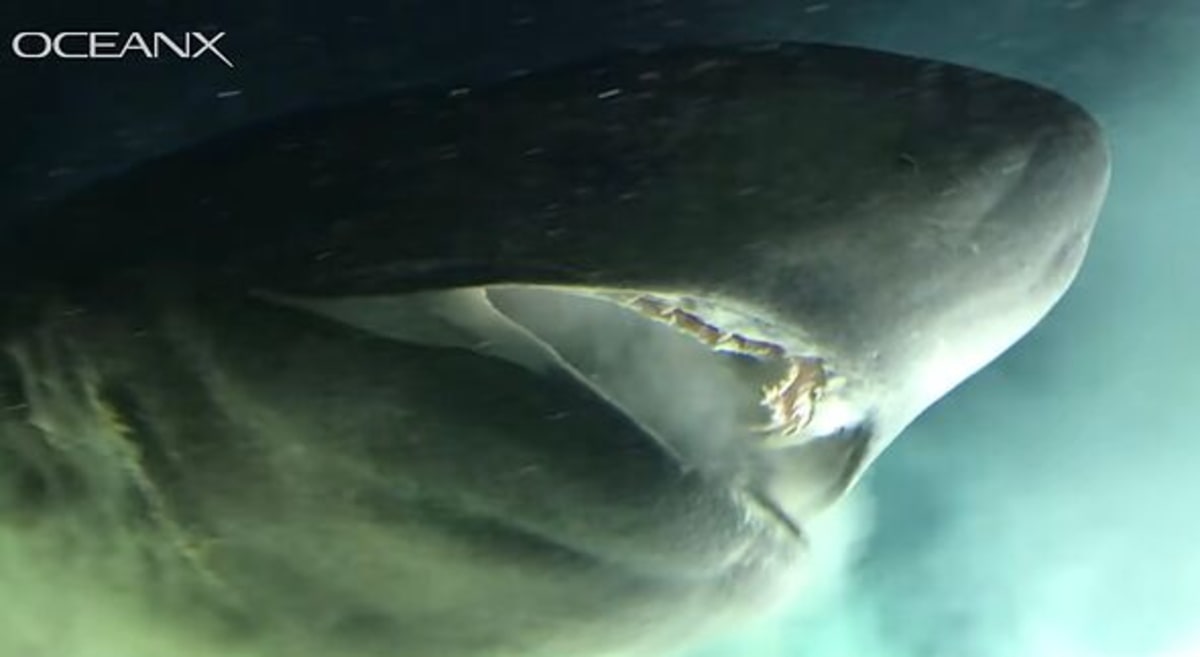
The massive deep-sea shark was filmed checking out the submarine (Image: OceanX)
Fascinating footage of a deep-sea shark has resurfaced online after sensational footage shows it approach a submarine while divers carry out an expedition deep below the ocean's surface.
The clip captures a historic moment when OceanX tagged an animal from a submersible "for the first time ever," according to the organization.
In it, a deep-sea shark, known as a bluntnose sixgill, is filmed swimming near the submarine, described as the dominant predator in the deep-sea ecosystem. Incredibly, this particular shark species predated most dinosaurs.
Huge SS United States ship sunk to become world's largest artificial reef
Sea turns red with blood as great white shark rips apart victim on beach
"The lead scientist on the mission, FSU Marine Lab's Dr. Dean Grubbs, has been the first to put a satellite tag on one of these elusive sharks, but until now had only been able to do so by bringing them up to the surface," OceanX explained on YouTube.
The Florida scientists tagged the incredible sharks from a submersible for the first time in history in 2019, a feat that required three expeditions, according to the Florida Museum. They also used a gargantuan 2,000 pounds of bait to complete the exercise.
The first attempts failed due to bad weather and misfiring spear guns, before the OceanX team, led by Florida State University ecologist Dean Grubbs and Cape Eleuthera Institute researchers Brendan Talwar and Edd Brooks, managed to complete the mission on June 29 that year.
The submarine was headed by Gavin Naylor, director of the Florida Program for Shark Research at the Florida Museum of Natural History.
As they swam to the bottom of the ocean in the Nadir submersible, the team had two satellite tags, and Naylor would have reportedly had just two chances to pin one to a bluntnose sixgill.
"It was like seeing a T. rex in the water. This lineage has been around for 100 times as long as Homo erectus (the ancient ancestor of humans), and these sharks haven't changed that much," Naylor explained at the time, as per the Florida Museum.
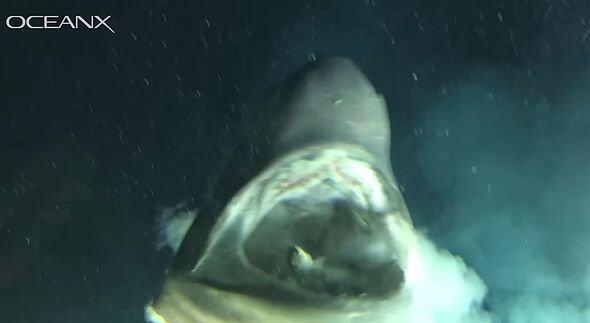
The successful shot was described as dumb luck (Image: OceanX)
He described his successful shot as "dumb luck," however, after he seized his opportunity while the shark approached the sub down over 1,700 feet below sea level.
Speaking about the unprecedented expedition, Grubbs added, "So much money has been expended on tagging great whites, and here we have a comparably sized predator, and we know almost nothing about it. Are they really rare? The answer may be that not many people are looking for them."
The deep-sea shark was previously poorly understood due to its often unreachable habitat at depths between 650 and 3,300 feet, a region of the ocean known as "the Twilight Zone".
The nonprofit organization OceanX is owned and operated by Dalio Philanthropies and was founded by billionaire investor Ray Dalio and his son Mark Dalio.
Source: Nature



0 Comments